
by Salvatore Tomasello
If you have just entered the world of the friscalettu, you have probably asked yourself one question: which key should you choose to begin with? The answer is not as simple as it may seem, as there are no fewer than 17 different keys, ranging from low C to high E.
So, which is the right key for learning to play? The truth is that there is no single answer, but I will try to offer you some useful advice.
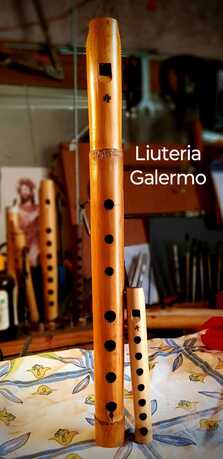
First of all, it is important to know that the friscalettu is a transposing instrument. What does this mean? In practice, each friscalettu is suited to playing in certain keys. For example, if you choose a friscalettu in C, the keys you can play in most easily are C, Am, Dm, F and G.
This means that while the basic keys may feel comfortable on a friscalettu in C, playing in other keys will be more difficult unless you are very familiar with the “cross-fingerings” required to play notes outside your instrument’s natural key.
Does Changing Key Change the Difficulty?
The answer is NO. The difficulty does not increase or decrease according to the key; the fingerings and the hand positions on the friscalettu remain the same, regardless of the key you choose. Therefore, if you learn to play a piece in C, you will not have to start from scratch when you switch to a friscalettu in G or F. Only the key changes, not the playing technique.
In addition to the key, another important aspect is the tone colour. Each friscalettu has its own distinctive “voice”, determined by its key and frequencies. For example:
The friscalettu in C is the most traditional and popular. It has a very high-pitched, bright and powerful sound, making it perfect for playing outdoors, such as on Sicilian carts, and in many other musical settings.
If you prefer a lower-pitched, warmer sound, you could choose a friscalettu in B-flat, A or G. These instruments produce a mellower, rounder and richer sound, making them ideal for stage performances with a microphone and for recording.
Finally, if you are looking for a lower tone, the friscalettu in low C is the right choice for you. Its sound is deeper and less piercing, making it perfect for musical productions in which the lower register plays a central role.
Which Key Should You Choose to Begin With?
If you are a beginner, C is probably the best choice. A friscalettu in C will allow you to learn the instrument properly, as it differs greatly from the plastic recorders you may have played at school. It is ideal for getting started and discovering the true character of the Sicilian friscalettu. Above all, its simpler keys also make it easier for other musicians to accompany you.
As you gain experience, you can begin exploring other keys, such as B-flat, A and G. Over time, you will develop the skills needed to progress and become familiar with instruments in lower or higher keys, depending on your personal taste and preferred musical style.
Conclusion: there is no right choice, but there is a good starting point
In conclusion, there is no universal key that suits everyone, but for beginners, the friscalettu in C is certainly one of the most suitable choices. Start with this one, develop your technique and then expand your musical repertoire according to your preferences.
Remember, the key you choose will not affect your ability to play the instrument, but it will certainly influence its tone colour and the expressive possibilities you can explore.
No Comments